






Heritage Tourism Awards Categories and Eligibility

  • Heritage Tourism – Best State

    Focus: Overall contribution to heritage tourism through conservation, infrastructure, promotion and visitor management.

    Eligible applicants: Central and State government bodies

    Category-specific details: Heritage conservation initiatives, tourist footfall, infrastructure development, digital outreach and community participation.

  • Heritage Tourism – Best City/Site

    Focus: Excellence in preservation and promotion of a heritage city, monument or destination.

    Eligible applicants: Central and State government bodies

    Category-specific details: Site conservation measures, visitor facilities, interpretation systems, cleanliness and local stakeholder involvement.

  • Riverside Heritage Tourism Award

    Focus: Riverfront destinations preserving cultural, historical and natural heritage.

    Eligible applicants: Central and State government bodies

    Category-specific details: Riverfront conservation, ecological sustainability, cultural activities, tourism infrastructure and public accessibility.

  • Best Tourist Circuit / Trail

    Focus: Well-developed tourism circuits or trails with strong cultural, spiritual or historical value.

    Eligible applicants: Central and State government bodies, tourism development authorities

    Category-specific details: Route details, connectivity, wayfinding systems, tourism infrastructure and integration with government tourism schemes.

  • Spiritual Tourism Award

    Focus: Promotion and management of pilgrimage destinations and spiritual tourism circuits.

    Eligible applicants: State governments, shrine boards and tourism authorities

    Category-specific details: Pilgrim facilities, crowd management, cleanliness measures, accessibility and safety arrangements.

  • Best Cultural Festival / Destination

    Focus: Preservation and promotion of traditional arts, music, dance and cultural heritage through festivals or destinations.

    Eligible applicants: State governments, cultural institutions, artist groups and NGOs

    Category-specific details: Cultural programming, artist participation, visitor engagement, heritage preservation efforts and economic impact on local communities.

  • Best Creative / Campaign

    Focus: Outstanding campaigns and creative initiatives promoting tourism destinations or heritage experiences.

    Eligible applicants: State governments, tourism boards and cultural institutions

    Category-specific details: Campaign concept, target audience, media reach, digital engagement and measurable tourism outcomes.

  • Best Innovation / Product

    Focus: Innovative tourism products, technologies or initiatives enhancing visitor experience and destination promotion.

    Eligible applicants: State governments, institutions, startups and NGOs

    Category-specific details: Nature of innovation, originality, scalability, visitor impact and contribution to tourism growth.

  • Sustainable Tourism

    Focus: Promotion of environmentally sustainable and community-based tourism practices.

    Eligible applicants: State governments, institutions, NGOs and tourism bodies

    Category-specific details: Environmental conservation, waste management, renewable practices, community participation and long-term sustainability outcomes.

  • Special Editorial Awards

    Based on the recommendation of THE WEEK Editors recognising institutions, projects, communities and people for their work.

NOTE: In case of insufficient nominations in any category, the decision of the jury will be final.

Overview

THE WEEK HERITAGE AWARDS 2026

Call for Nominations

THE WEEK invites nominations for the second edition of the THE WEEK Heritage Awards, recognising the work of governments, institutions, organisations and individuals committed to preserving and promoting India’s cultural heritage.

The awards honour initiatives that protect heritage while strengthening tourism, community participation and cultural continuity. Open to both institutional and public nominations, the platform aims to widen recognition for meaningful work across the sector. This work will be recognised through the Golden Banyan Award and Silver Banyan Award in each category.

Jury Members

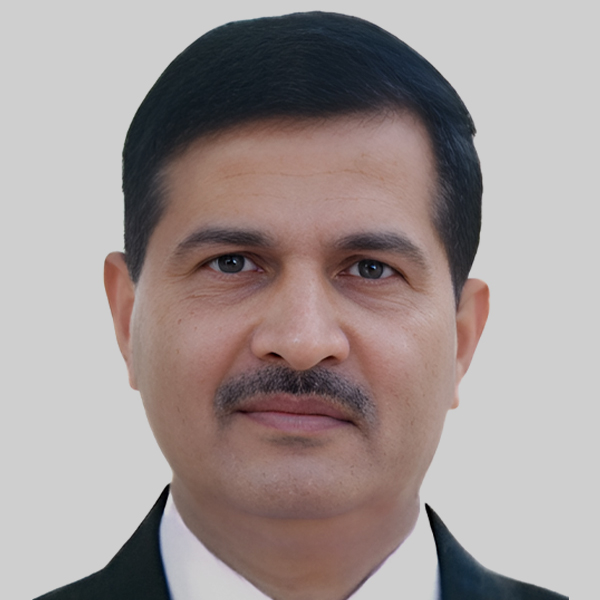
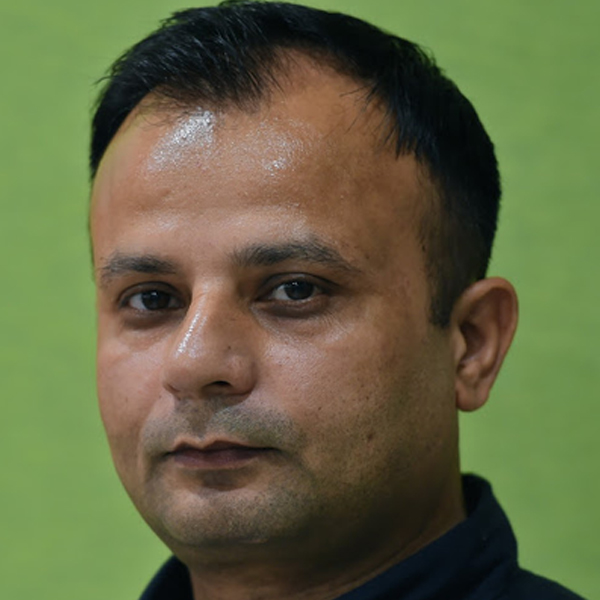
Ashwini Lohani

Director, Prime Ministers Museum & Library

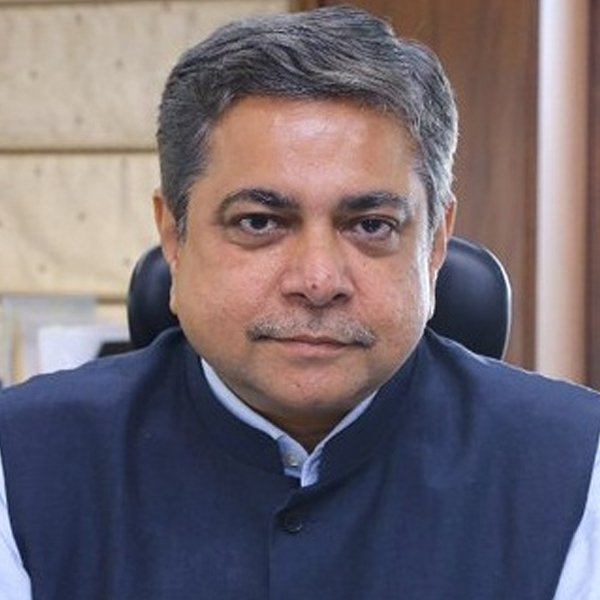
Arvind Singh

Former Secretary, Ministry of Tourism, Government of India

Pratul Sharma

Senior Assistant Editor, THE WEEK

Supported by

Associate Sponsor
Silk Purity Partner
Fragrance Partner

Who can apply

State tourism boards

State government tourism bodies

Restoration Agencies

Submission Guidelines

Applicants are required to provide relevant details based on their category. Submissions may include:

  • Description of the project, destination or initiative
  • Cultural or historical significance
  • Conservation or preservation efforts undertaken
  • Visitor or engagement data (last three years, where applicable)
  • Community involvement and outreach
  • Marketing and promotional activities
  • Supporting visuals such as photographs, videos or maps
  • Category-specific details may include:

  • For circuits and trails: route details, infrastructure and integration with government schemes
  • For pilgrimage tourism: facilities for pilgrims and cleanliness measures
  • Best Innovation / Product
  • Sustainable Tourism

UNESCO World Heritage Sites

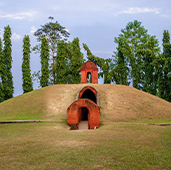
MOIDAMS – THE MOUND-BURIAL SYSTEM OF THE AHOM DYNASTY (2024)

Location: Assam, India

Situated at the foothills of the Patkai Ranges in eastern Assam, Moidams are royal necropolises of the Tai-Ahom dynasty. These mound-burial structures hold profound cultural and spiritual significance for the Tai-Ahom community.

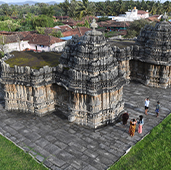
Sacred Ensembles of the Hoysalas (2023)

Location: Karnataka

The Hoysala temples, including the Chennakesava, Hoysaleswara, and Keshava temples, are known for their detailed carvings, star-shaped layouts, and detailed sculptures, showcasing a distinct form of Dravidian temple architecture.

Santiniketan (2023)

Location: West Bengal

Founded by Rabindranath Tagore, Santiniketan later became Visva-Bharati University. It emphasises cultural interchange, art, and education, blending Indian traditions with global influences in architecture and philosophy.

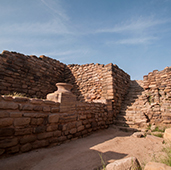
Dholavira: A HARAPPAN CITY (2021)

Location: Dholavira, Gujarat

Discovered in 1968, Dholavira is one of the largest cities of the Indus Valley Civilisation. Known for its advanced water management systems, security features, and extensive use of stone in construction, it is a remarkable testament to Harappan ingenuity.

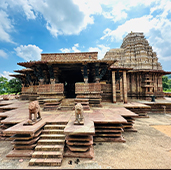
KAKATIYA RUDRESHWARA (RAMAPPA) TEMPLE, TELANGANA (2021)

Location: Warangal, Telangana,

Built during the Kakatiya period by rulers Rudradeva and Recharla Rudra, the Ramappa Temple is notable for its intricate cravings and lightweight floating bricks used in its pyramidal vimana. The sandstone temple is a masterpiece of medieval architecture.

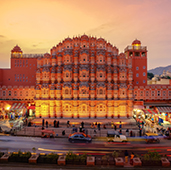
JAIPUR CITY, RAJASTHAN (2019)

Location: Jaipur, Rajasthan

Founded in 1727 by Sawai Jai Singh II, Jaipur stands out as a planned city designed using a grid layout inspired by Vedic architecture. Originally established as a commercial hub, Jaipur has preserved its artisanal and trade traditions over centuries.

Victorian Gothic and Art Deco Ensembles of Mumbai (2018)

Location: Mumbai, Maharashtra

This architectural ensemble, which includes icons like the Chhatrapati Shivaji Maharaj Terminus and Marine Drive, combines 19th-century Victorian Gothic architecture and 20th-century Art Deco styles, reflecting Mumbai's colonial and modern heritage.

HISTORIC CITY OF AHMADABAD (2017)

Location: Ahmedabad, India

Founded in the 15th century by Sultan Ahmad Shah, the walled city of Ahmedabad, on the eastern bank of the Sabarmati River, showcases a rich architectural heritage from the sultanate era.

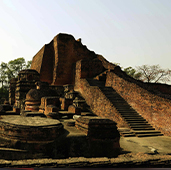
ARCHAEOLOGICAL SITE OF NALANDA MAHAVIHARA (2016)

Location: Nalanda, Bihar

Situated about 88km from Patna, the Nalanda Mahavihara was founded in the 5th century CE by Kumargupta I of the Gupta dynasty. This site served as a significant centre of learning and is one of India’s most important archaeological landmarks.

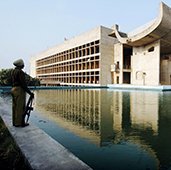
The Architectural Work of Le Corbusier, an Outstanding Contribution to the Modern Movement (2016)

Location: Chandigarh

Le Corbusier's urban planning for Chandigarh, including the Capitol Complex, represents modernist design that combines functionality and and aesthetics in post-independent India.

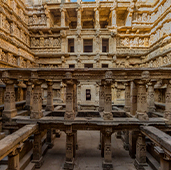
Rani-ki-Vav (the Queen’s Stepwell) at Patan, Gujarat (2014)

Location: Patan, Gujarat

Built in the 11th century by Rani Udaymati, the intricately carved stepwell on the banks of the Saraswati River is a stunning example of Maru-Gurjara architecture. It serves as both a water reservoir and an underground shrine.

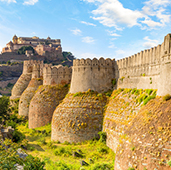
HILL FORTS OF RAJASTHAN (2013)

Location: Rajasthan, India

Located in Rajasthan, this UNESCO site comprises six grand forts in Chittorgarh, Kumbhalgarh, Sawai Madhopur, Jhalawar, Jaipur, and Jaisalmer. These forts encompass urban centres, temples, and trading hubs, reflecting a rich courtly culture of learning, music, and art.

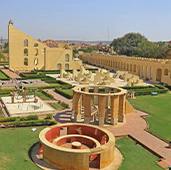
The Jantar Mantar, Jaipur (2010)

Location: Jaipur, Rajasthan

Built by Maharaja Jai Singh II in 1734, this astronomical observatory features massive stone equipment for celestial observations, demonstrating India's advanced scientific tradition.

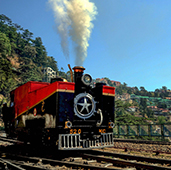
Mountain Railways of India (1999, 2005, 2008)

Location: Darjeeling (West Bengal), Nilgiri (Tamil Nadu), Kalka-Shimla (Himachal Pradesh)

A historic network of narrow-gauge trains built under British rule, these engineering marvels traverse rugged mountain terrain, giving out spectacular views while preserving the legacy of colonial-era railways.

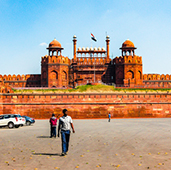
Red Fort Complex (2007)

Location: Delhi

This magnificent fort, built by Muglal emperor Shah Jahan in 1648 is a symbol of Mughal architectural brilliance. Iconic structures inside the complex include Diwan-i-Aam, Diwan-i-Khas, and the Moti Masjid.

CHAMPANER-PAVAGADH ARCHAEOLOGICAL PARK (2004)

Location: Panchmahal, Gujarat

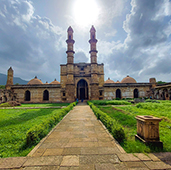
Founded by Sultan Mahmud Begda, this site features monuments on Pavagadh Hill, rising 800 meters above the surrounding plain. Its attractions include palaces, mosques, temples, gateways, wells, and reservoirs, offering a unique blend of natural and historical significance.

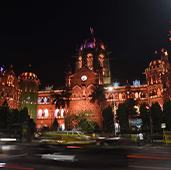
CHHATRAPATI SHIVAJI TERMINUS (FORMERLY VICTORIA TERMINUS) (2004)

Location: Fort, Mumbai, Maharashtra

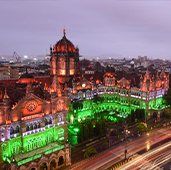
Designed by British architect F.W. Stevens, this iconic structure was completed in 1888 after ten years of construction. With its stained-glass windows, domed arches, and intricately carved pillars, it reflects a blend of Victorian Gothic and Indian palace architecture.

GREAT LIVING CHOLA TEMPLES (1987, 2004)

Location: Tamil Nadu

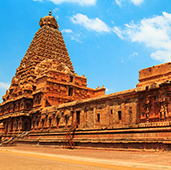
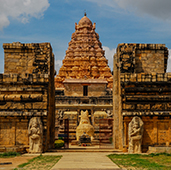
Built by the Chola dynasty between the 10th and 12th centuries, the Brihadeeswarar Temple (Thanjavur), Gangaikondacholeswaram Temple (Gangaikondacholapuram), and Airavatesvara Temple (Darasuram) stand as monumental testaments to Chola architectural and artistic brilliance.

Rock Shelters of Bhimbetka (2003)

Location: Madhya Pradesh

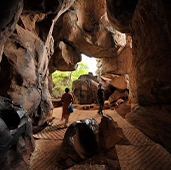
This archeological site contains prehistoric rock paintings from the Paleolithic period and the Mesolithic period. The shelters provide insights into early human settlements and artistic expression in India.

MAHABODHI TEMPLE COMPLEX AT BODH GAYA (2002)

Location: Bodh Gaya, Bihar

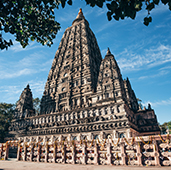
The Mahabodhi Temple Complex is one of the four sacred sites associated with the life of Lord Buddha. It marks the location of his enlightenment and is revered as a pilgrimage destination by Buddhists worldwide.

HUMAYUN’S TOMB, DELHI (1993)

Location: New Delhi, Delhi

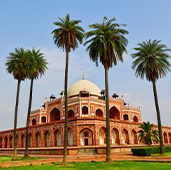
Built in 1570, Humayun’s Tomb was the first garden-tomb in the Indian subcontinent and served as a precursor to Taj Mahal. A collaboration between Persian and Indian craftsmen, it influenced subsequent Mughal architectural innovations.

Qutb Minar and its Monuments, Delhi (1993)

Location: Delhi

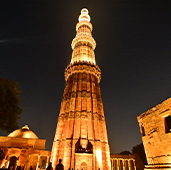
The Qutb Minar, a 73-metre-high red sandstone tower, is a masterpiece of Indo-Islamic architecture. Surrounding landmarks such as the Quwwat-ul-Islam Mosque and the Iron Pillar, showcase Delhi's rich historical and cultural heritage.

BUDDHIST MONUMENTS AT SANCHI (1989)

Location: Sanchi, Madhya Pradesh

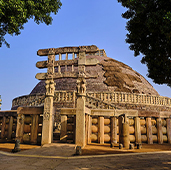
The village of Sanchi is famous for its ancient Buddhist monuments, which date from the 3rd century BCE to the 12th century CE. The Great Stupa, built by Emperor Ashoka, stands on a 300-foot-high hill on the banks of the Betwa River.

ELEPHANTA CAVES (1987)

Location: East of Mumbai Harbour, Maharashtra

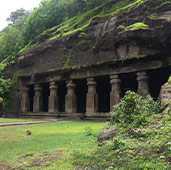
Located on an island in the Arabian Sea near Mumbai, the Elephanta Caves house magnificent sculptures, including the Ardhanarishvara statue and depictions of Shiva’s life. Most sculptures date back to the Silhara dynasty (9th to 13th centuries).

GROUP OF MONUMENTS AT PATTADAKAL(1987)

Location: Pattadakal, Karnataka

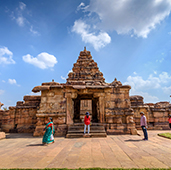
Pattadakal (Pattadakallu), also known as Raktapura, is a 7th-8th century CE complex in Northern Karnataka. Described by UNESCO as a fusion of northern and southern Indian architecture, it represents the pinnacle of eclectic art.

CHURCHES AND CONVENTS OF GOA (1986)

Location: Goa

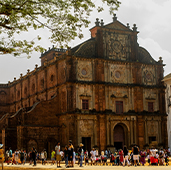
These churches and convents, remnants of Portuguese colonial rule, showcase Portuguese architectural styles and Christian heritage in India. They were inscribed as a UNESCO World Heritage Site in 1986.

GROUP OF MONUMENTS AT HAMPI (1986)

Location: Hampi, Karnataka

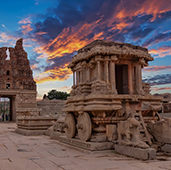
Hampi, also known as the Hampi Group of Monuments, was once the grand capital of the Vijayanagar Empire. Nestled along the Tungabhadra River amid rocky hills, Hampi’s ruins reflect its historical and architectural legacy.

FATEHPUR SIKRI (1986)

Location: Uttar Pradesh

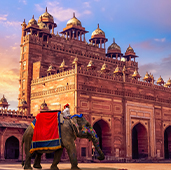
Fatehpur Sikri, built by Mughal Emperor Akbar, symbolises the architectural and cultural grandeur of the Mughal Empire. Its intricately carved walls and ornate decorations exemplify artistic brilliance.

KHAJURAHO GROUP OF MONUMENTS (1986)

Location: Khajuraho, Madhya Pradesh

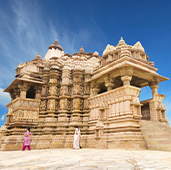
Constructed during the 10th and 11th centuries by the Chandella dynasty, the temples at Khujuraho represents the zenith of northern Indian temple architecture. The towering central spire, flanked by smaller spires, epitomises architectural brilliance.

GROUP OF MONUMENTS AT MAHABALIPURAM (1984)

Location: Mahabalipuram, Tamil Nadu

Formerly a thriving Pallava port city, Mahabalipuram features monuments such as rock-cut cave temples, monolithic shrines, bas-relief sculptures, and structural temples, along with excavated temple remains. The Shore Temple, adorned with thousands of sculptures, stands as a tribute to Lord Shiva.

Sun Temple, Konârak (1984)

Location: Odisha

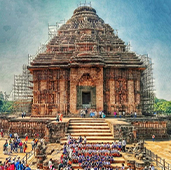
Built in the 13th century by King Narasimhadeva I, this chariot-shaped temple is devoted to the Sun God Surya. Its exquisite carvings depict celestial and mythological themes, making it a masterpiece of Kalinga architecture.

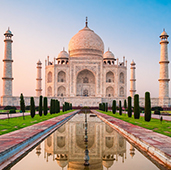
Taj Mahal (1983)

Location: Agra, Uttar Pradesh.

This white marble monument, commissioned by Emperor Shah Jahan in memory of his wife Mumtaz Mahal, is a Mughal architectural masterpiece that symbolises eternal love incorporating Persian, Indian, and Islamic influences.

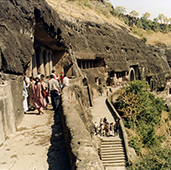
AJANTA CAVES (1983)

Location: Aurangabad District, Maharashtra

The Ajanta Caves are renowned for their breathtaking Buddhist sculptures and murals, portraying the life of Buddha and showcasing India’s ancient artistic brilliance. These 30 cave paintings were carved into rock between the 2nd century BCE and the 6th century CE.

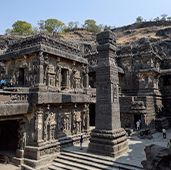
ELLORA CAVES (1983)

Location: Aurangabad, Maharashtra

The Ellora Caves, a UNESCO World Heritage Site, comprise 34 caves built between the 4th and 9th centuries CE. These caves reflect religious harmony, with 12 Buddhist, 17 Hindu, and 5 Jain structures featuring intricate carvings and towering sculptures.

Articles

For queries and further information:

Contact

Ashish Gupta (Delhi): 9871565060

Jyoti Handa (Mumbai): 9810336976

Yuvaraj J (Chennai): 9176888806

Praveen Gopinathan (Bengaluru): 7259014885

Abraham T. George (Hyderabad): 9849390462

Sushmita B. Mitra (Kolkata): 9830201011

Krishnakumar R. (Thiruvananthapuram): 9895757910

Sreedevi Gopinath (Kottayam): 8281433295

Email ID: heritageawards@theweek.in